Impact Stories: Voices & Visions
Pleasure to welcome
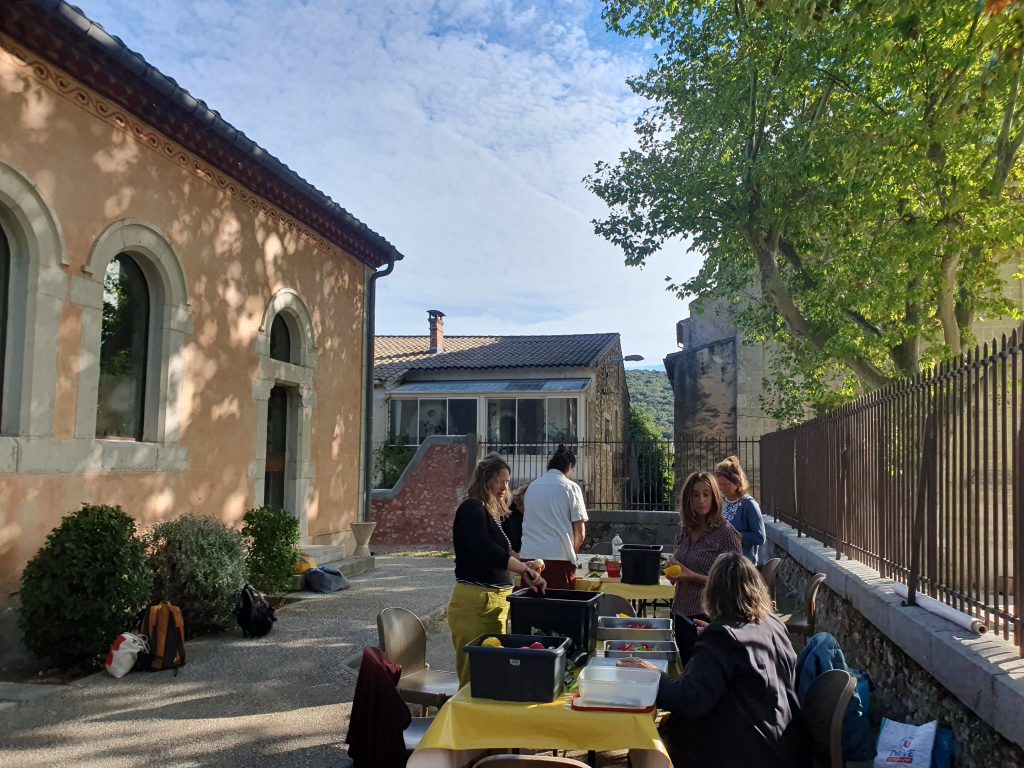
One of the great joys of this project, which I hadn’t anticipated, was the pleasure of organizing the welcoming of foreigners.
I didn’t think I would feel joy in showcasing our activities, our way of life, and our people, and yet it was a rich experience. When we operate within our national frameworks, the reflex is often one of criticism. We emphasize the negative, whether it be in public policies, aid to organizations, the connections between people, or the difficulties in developing projects.
Beyond the associative sphere, the perception of ourselves and others is critical. We see ourselves as rebellious, grumpy, lazy, or angry. The reality I observed was that all the hosts took enormous pleasure in meeting our volunteers. The majority tried to speak English, ask questions, and show what they had to show. I was very moved by this welcoming spirit and very surprised to feel it so deeply within myself.
There was joy in creating shared moments, and there was pride in showing what we had created.
It seems rare to feel such genuine and appropriate pride. Often, devaluation or criticism prevails.
Through this experience, the project strengthened self-confidence, faith in what was being offered, and faith in the kindness of others, emphasizing the beautiful and positive aspects rather than pervasive self-criticism. It’s not a tangible educational tool, but a fundamental experience for
moving forward!
Milena Lachmanowits, L’Engrainé, France
Unpacking Words.
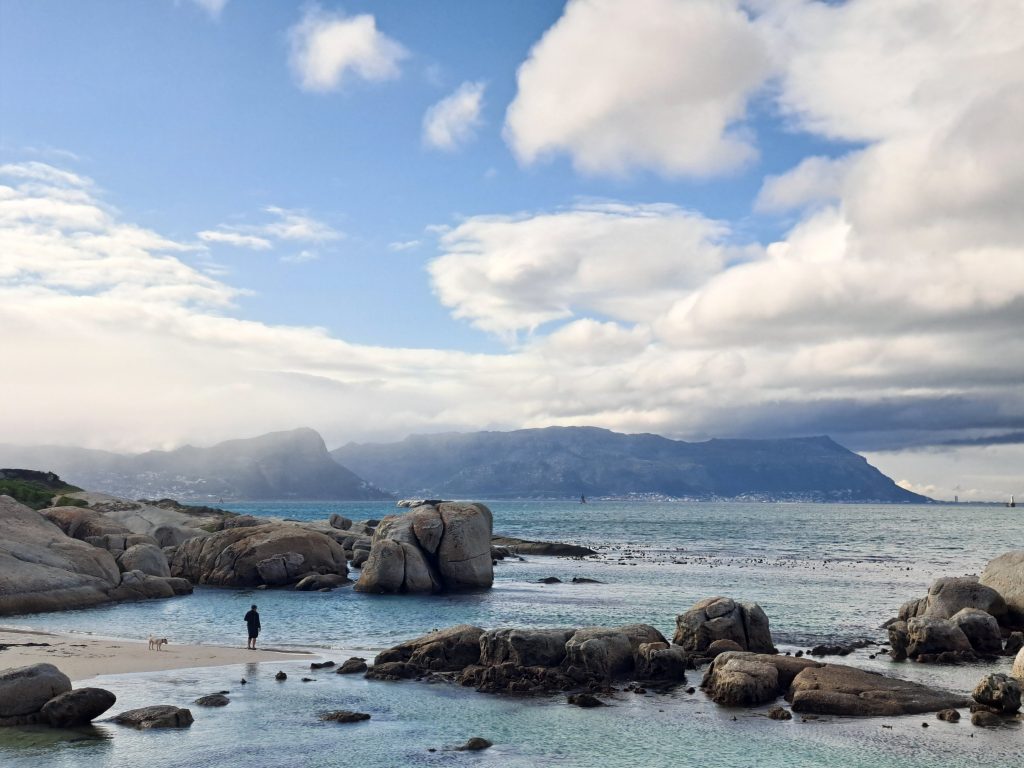
When groups come together from different lived realities, cultures and places, it is wise to come to a common understanding of the words used to describe the common goals of the project right at the very beginning. It would probably be wise even when we are in homogenous groups of what we deem like-minded people. Words like ‘sustainability’, ‘youth’, ‘success’, ‘entrepreneur’, ‘transparency’, ‘participatory’ can have vastly different meanings to different people. The word that I found myself wanting to understand better on this project, was ‘migrant’.
Migrant in my mind, sat next to the word labour, and was attatched to apartheid spatial divides that dictated who could live where, based on the colour of their skin.
Migrant resulted from the separating of families as men went to work in mines and factories, and women went to clean white peoples homes and offices, to meet the need of systems imposed upon them.
Migrants were the people who’s lands that had healthily sustained them for hundreds of years, had that land violently stolen from beneath them, or plundered and left in complete disrepair.
Migrant referred to the continuous movement of people over time in an attempt to survive a system that does not have their best interests at heart – to feed their families, to achieve their dreams, to survive.
Migrant sounded oppressive, whilst migratory sounded more like freedom.
As we each unpacked what memories, experiences and preconceived ideas we attached to words, we were also able to identify how much emotion can sit within a word, and that each time that word gets spoken or written or read or heard, all of these bodies of emotion are evoked. This practice has helped me to have much deeper and more empathetic conversations, and has certainly enriched my experience of the project and the work that I do.
Theresa Wigley, Amava Oluntu, South Africa
Work With, Not For — Lessons from L’Abeille Verte
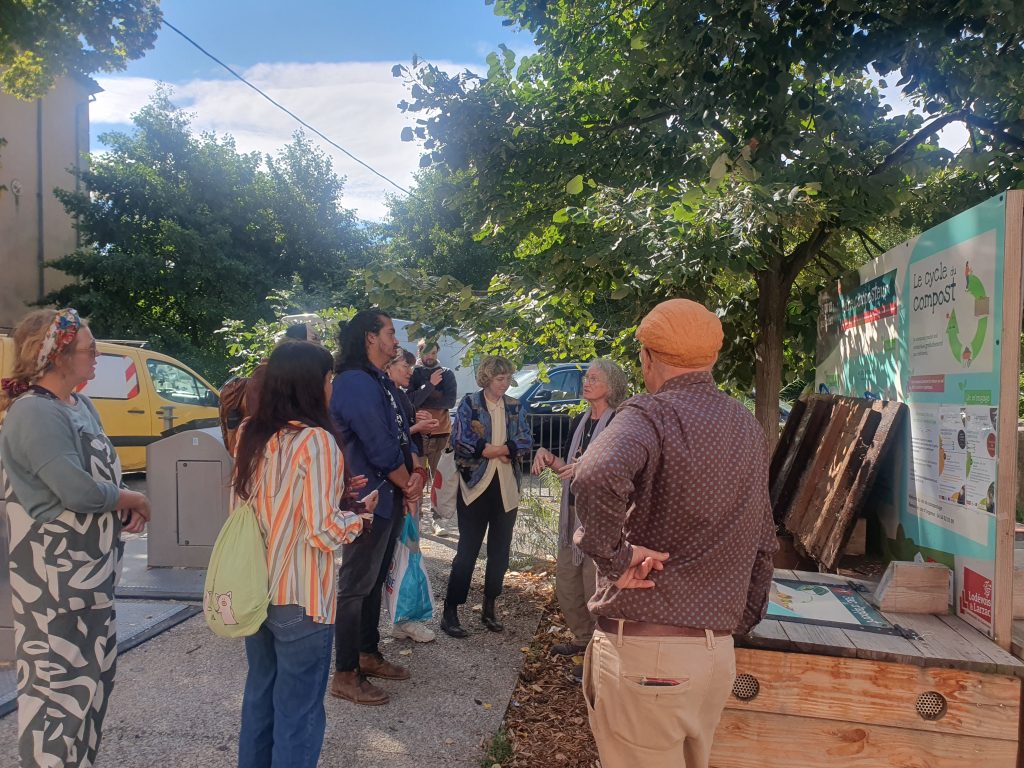
Visiting L’Abeille Verte in Lodève felt like stepping into a living blueprint of what a social economy can look like when it truly serves people. The organisation is part of France’s Territoires Zéro Chômeur de Longue Durée initiative — a network of “Enterprises with a Purpose for Employment” that transform long-term unemployment benefits into funding for locally useful jobs.
The concept sounds simple, but its effect is profound: people who have been out of work for years are invited to co-create activities that meet real community needs — from recycling and repair to eco-gardening, composting, or digital services. The only rule: these new jobs must complement, not compete with existing businesses. In other words, the focus is on filling the gaps, not the market.
Visiting their different sites, workshops, garden plots, second hand stores, it was clear that this model rests on a deep trust in people. Instead of assuming inactivity, it assumes the opposite — that every human wants to contribute, to bring something valuable to the collective. Public money isn’t spent to keep people afloat; it’s invested to let them participate.
I found it brilliant that the idea has now proven itself beyond Lodève, already spreading to Belgium and inspiring municipalities in other countries. But what stayed with me most was not the scale; it was the mindset. The project doesn’t ask, “How do we give people jobs?” but “How do we recognise the work people are already willing to do for their community?”
For my work at Altes Volksbad in Mannheim, this insight hits home. As a community manager, I often think about how to involve people meaningfully — not just as visitors or users, but as co-creators. L’Abeille Verte reminded me that participation doesn’t start with invitations or programmes. It starts with trust: the belief that people already hold ideas, energy, and skills worth weaving into the fabric of a place.
The visit left me inspired and a little humbled. Social innovation, I realised, doesn’t always mean inventing something new. Sometimes it’s about rearranging what already exists – resources, people, space – until it begins to work with the community, not merely for it.
Tom Woschitz, Starkmacher e.V., Germany
Girlz Crew: Graffiti in France
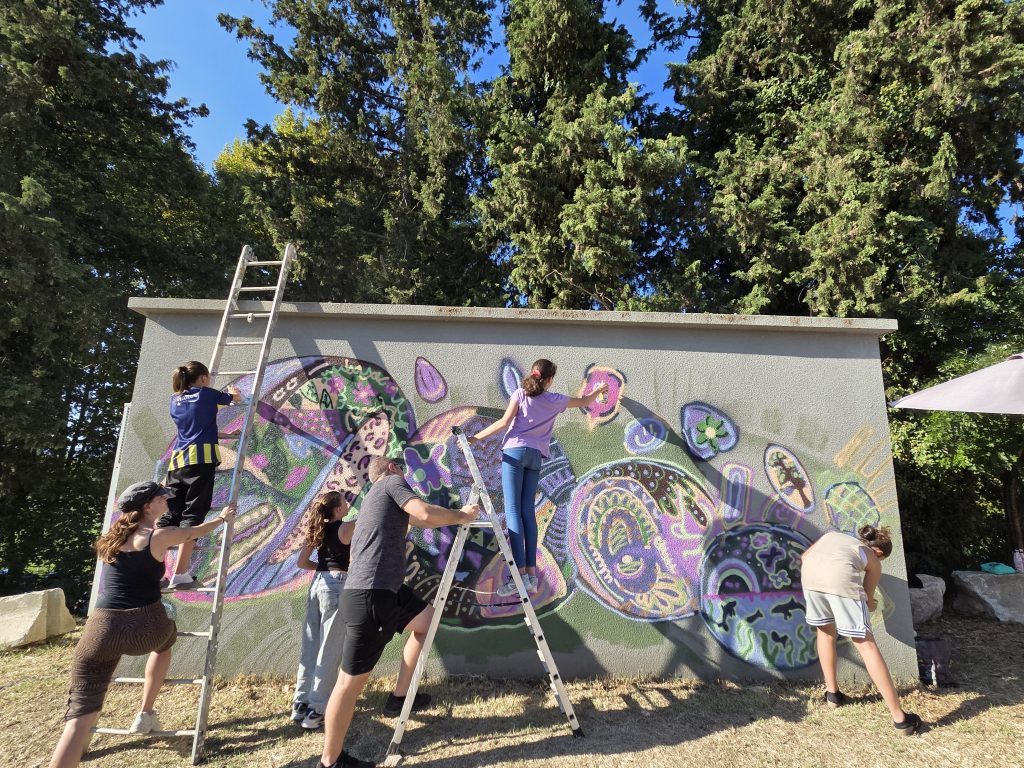
It took a bit of pre-planning: Milena to connect with the municipality, find a wall, get permission and communicate with the teachers and group of teens who would participate.
Our wall was at the entrance of a sports complex and therefore needed a sporty feel. We had only one (hot) afternoon to achieve our ‘participaintory’ mural and luckily everyone arrived full power.
It was a whole different experience facilitating a group where my words were being translated and I had no idea the tone or real meaning that my facilitation was being delivered.
We had a fantastic group of teenage girls, none of which had every spray painted before. I did my best to keep them in the main shapes (they were totally free to paint inside the lines), but there was no stopping the electric energy that just wanted to bust out.
We had a visit from the police, a local female politician who painted with and, a few mini dramas with kid dynamics: which needed to be figured out with the help of interpreters. But by the end of the afternoon we had a painting and a super happy girlz crew!
…some worlds of the city hall about the workshop:
„The way this day went was perfect: allowing the young people total creativity, without too much intervention, just with a simple instruction „decorate inside“, I loved her gentle way of working and the result is fantastic. We are delighted to have shared this moment with all of you.“
Claire Homewood, Amava Oluntu, South Africa
Video
A video presentation of the project will be created to share our experiences over the past two years. Theresa will film life’s moments, both small and large, that she will compile and organize into a final presentation.
We were assisted by Theresa to create our own interviews about our vision for the project. Three questions were posed:
What is this project about?
What has been the most interesting lesson learned in this project so far?
What have you found particularly effective in developing young people’s entrepreneurial skills?
We paired up and shared our feelings. Once these discussions were complete, we were able to begin producing the videos. The format was simple: answer these three questions in the language of our choice in four minutes or less.
The exercise was interesting in several ways. It allowed us to reflect on what we had
accomplished so far and to compare it with a different perspective. Much like the stories we
publish about this project, the video was an opportunity to clarify our ideas and recall the lessons and skills we acquired.
Beyond this aspect, the video gave us a new experience in confronting a camera. Although the videos were made in a basic way (using our smartphones, in a public space, and between us), speaking and organizing thoughts while being filmed is an adventure. Filming others is also interesting, and the care taken to highlight each person’s words is important.
I would like to reuse this tool in the youth groups I support. The objectives could be diverse: discussions on themes, assessments, a group presentation tool… Everything needs to be thought out, but the image medium, via the phone, based on a simple frame and in a short format, seems good to develop. I like the idea of creation shared by the various videos filmed by the participants.
We will probably use it during the Aniane festival in October to familiarize ourselves with the tool and benefit from a memory of the moment through images.
Milena Lachmanowits, L’Engrainé, France