
Impact Stories: Seeds of Connection
Togetherness Makes the Impossible Possible
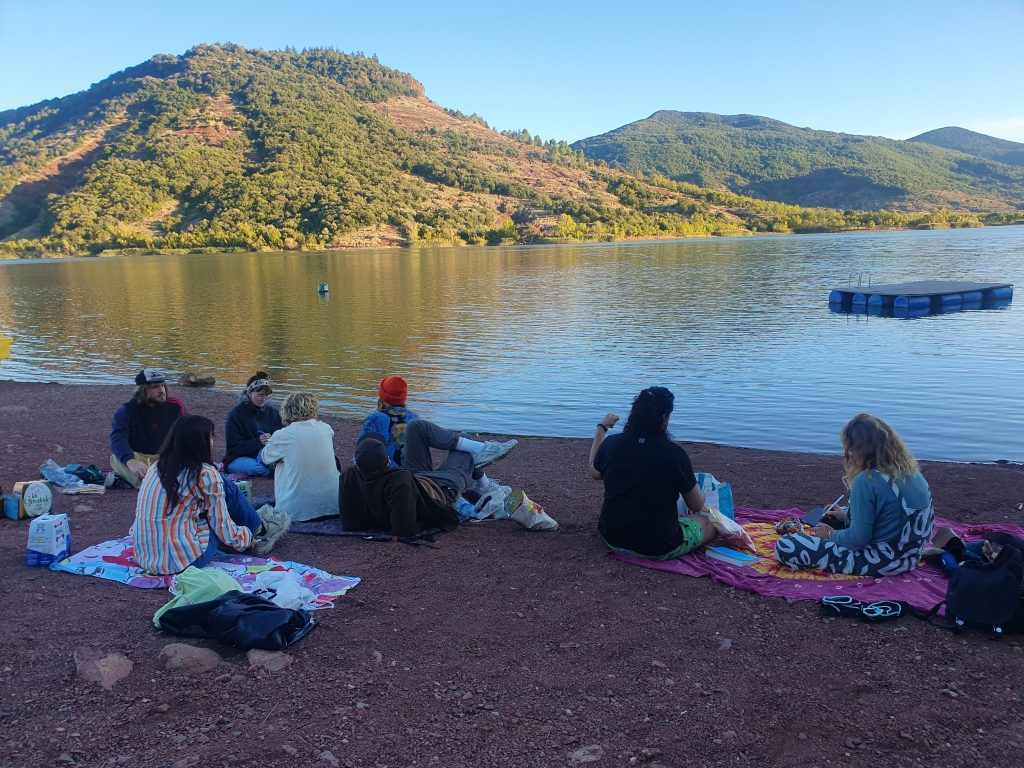
Working with youth as they navigate all of the challenges and complexities that present themselves on the journey to independence, what comes up time and time again, is huge appreciation for spaces that bring people together, whether that is with a specific focus and intent, like a workshop or networking event, or a purely social gathering, or the simple act of working alongside each other in a shared workspace – the act of gathering helps people to feel like they have access to a much bigger realm of support and care.
Someone to walk into a new and intimidating space with, someone to ask questions of, someone to teach you a skill, someone to share your own skills with, someone who notices if you show up or not – these communities of care are essential to our well being and confidence to pursue things that might otherwise feel too scary.
This project has created such a community for me, and I feel not only connected to the four participating organisations, but also to their extended communities. Visualising all of these interconnected nodes of action and creativity, feels very empowering as it illustrates how small pockets of action, when connected to each other, can very quickly become massive movements, and then it indeed becomes possible to change things that previously seemed insurmountable.
Theresa Wigley, Amava Oluntu, South Africa
Listen and Sea — How a Method Travels When We Share It
Sometimes a method has its own journey.
Two years ago, I first learned about the Silent Lab approach during the Erasmus+ project DIYverse: an immersive listening format using silent-disco headphones to shift perspective and invite reflection. We later integrated it into Starkmacher’s work in Mannheim, shaping and adapting it to our local needs.
During the SEEDS 4 Youth mobility in Cape Town, the method found new companions. I met artist CareCreative through Amava Oluntu, and very quickly our conversations moved from “this is interesting” to “what could we build together?” Her strength is visual storytelling rooted in environmental care; mine is crafting immersive listening experiences. Two completely different practices — yet driven by the same desire: help people connect more deeply with the world around them.
Across the months of the project, this exchange became a thread we kept returning to. And threads, when followed, often lead somewhere unexpected. Claire connected the method with her work with the African Bioacoustics Community (ABC) who research and work with nature recordings. Suddenly, Silent Lab had a local heartbeat: a soundscape shaped by the place itself.
What followed was a wonderful collaboration:
- We developed a concept to combine ABC recordings, Mural painting and the Silent Lab
- ABC shared their recordings
- Toni Giselle Stuart contributed her amazing poem “Ocean Home”
- I produced the Silent Lab journey in Germany,
- Claire prepared a creative workshop that would translate listening into art.
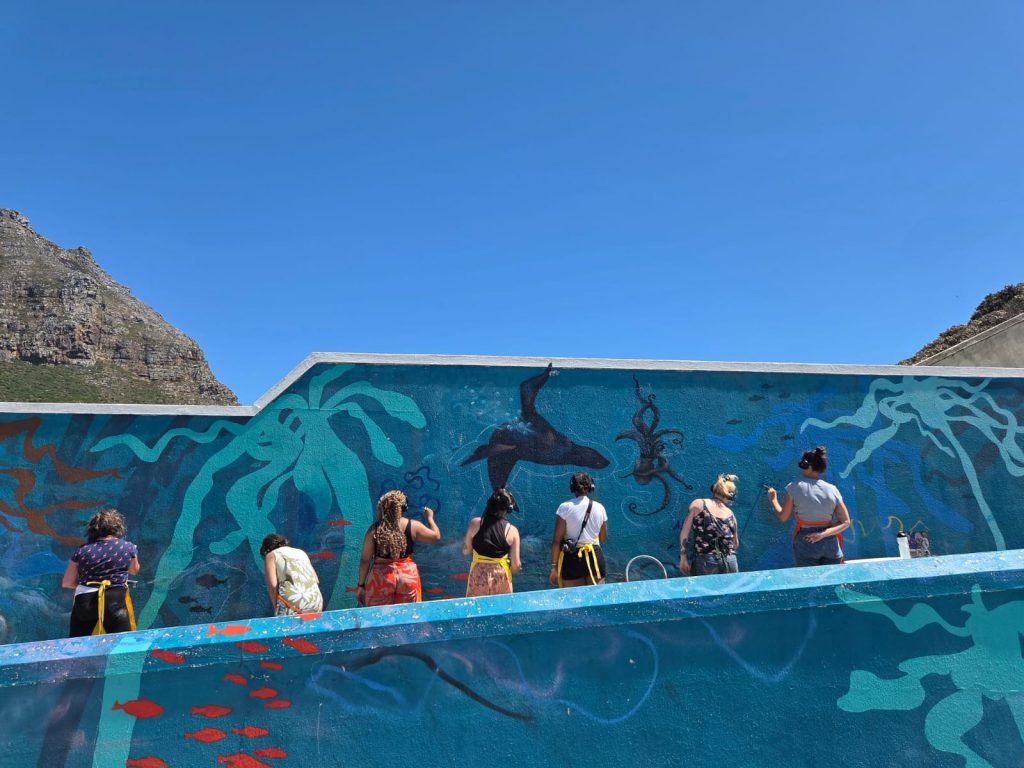
And on 02 December 2025, the method lived a new chapter. The first “Listen and Sea” Silent Lab was implemented in Capetown, where people experienced their own coastline through sound and then painted what they heard. Their pieces became part of a public mural — a visual echo of an underwater world that often goes unnoticed.
For me, the most powerful part of this story is not the tool itself, but the way it grew. A method learned in one country, developed in another, and brought to life in a third — shaped by people with very different skills, all contributing what they could.
It is a reminder that:
- knowledge multiplies when shared,
- collaboration makes ideas sturdier,
- and creativity expands when we trust others to carry something forward in their own way.
The journey of Silent Lab showed me how far a method can travel when it stops belonging to one person and becomes a shared effort. It’s a quiet kind of impact — built not through control, but through connection.
Thomas Woschitz, Starkmacher e.V., Germany
Talking Plants?
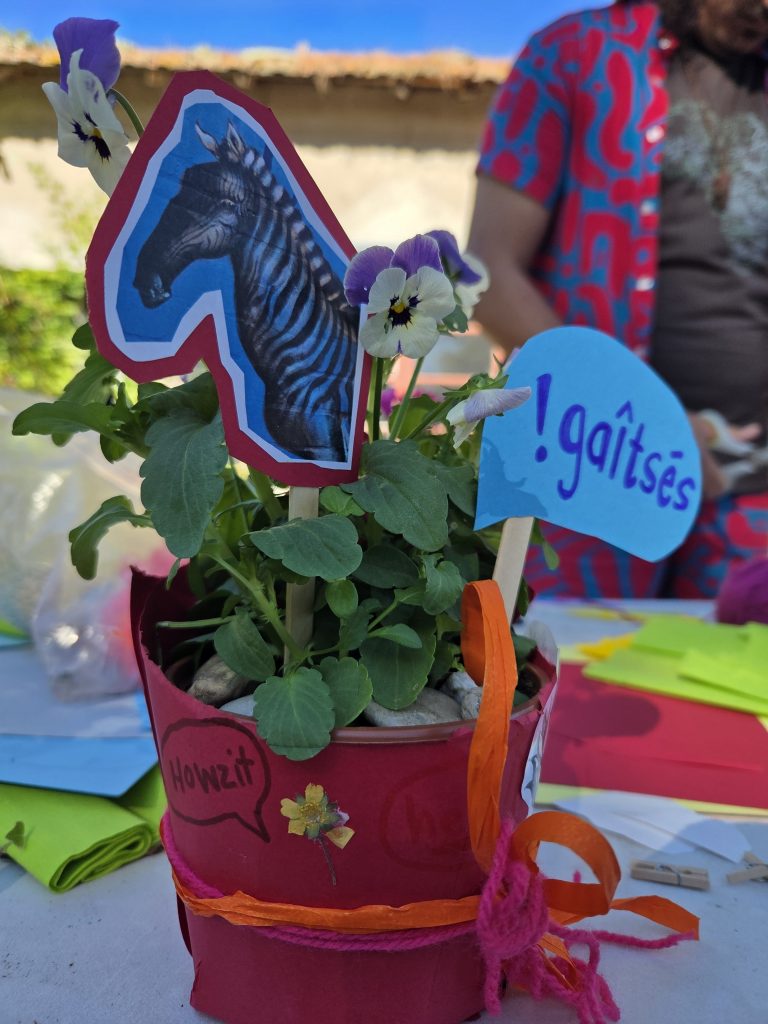
Ja totally….We made plants talk in France – with a lady who is employed by the state to make libraries cool by running tech centered projects with young people. How awesome is that compared the photocopies well meaning A4 info sheet on what our local city library strives to be and offers in point form.
What she showed us was a Bare Conductive Touch Board Pro Kit that can make plants “talk” by turning their natural electrical conductivity into touch-activated triggers for audio, lights, or interactive experiences.
Here’s how it works and how you can use it:
Why Plants Can Be Sensors
Most living plants contain moisture and electrolytes, which means they are slightly conductive. When a person touches a leaf, they change its electrical signal. The Touch Board senses this change through capacitive touch—the same technology used in touchscreen phones.
How the Touch Board Pro Kit Makes Plants “Talk”
1. Connect a leaf to an electrode. Using the kit’s Electric Paint or a simple alligator clip, you connect any leaf/stem to one of the board’s 12 touch electrodes. Each electrode can represent a message or sound.
2. Capacitive sensing detects human touch. When someone touches the connected plant, the electrode’s capacitance changes. The Touch Board interprets that as a “touch event”.
3. Trigger a sound file. The Touch Board has: A microSD card, A built-in MP3 player, Speaker output. Each electrode can play a different audio file.
It can also trigger recorded messages, music, explanations, or storytelling.
What You Can Make the Plant “Say”
You can store up to 12 unique sounds. We each recorded a 7 second clip explaining what the SEEDS4youth project is in our own language. In the end our pot plants spoke multiple languages and touched on many different explanations and interpretations, showing the diversity of our team.
There are so many applications for this idea and I really can’t wait to experiment!
Claire Homewood, Amava Oluntu, South Africa
Building Up
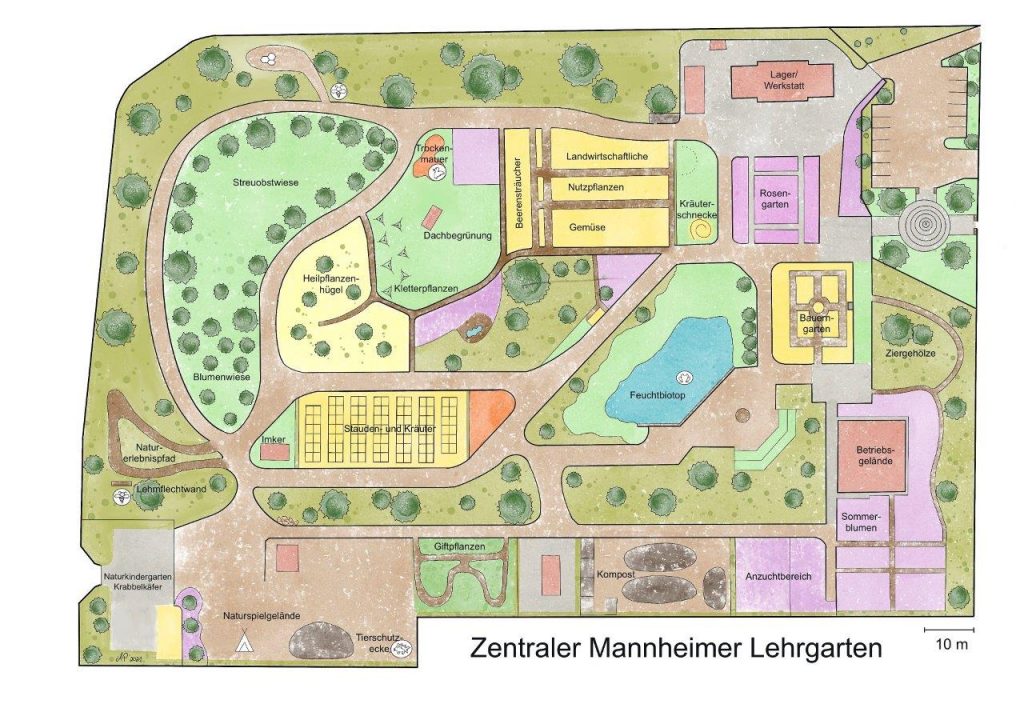
I’ve always loved looking at maps — they show us the world in miniature, with lines and shapes that tell stories of landscapes, cities, and human connections. Yet, some maps only come to life when you walk through them.
This is the case of the Zentraler Mannheimer Lehrgarten, a 2.5-hectare space where nature, education, and social inclusion come together in a project that leaves a meaningful impact.
As part of the Erasmus+ KA2 project SEEDS 4 Youth, I had the chance to explore this garden as a learner, a team member, and a change-maker. We experienced how environmental practices can bring people together.
At the Zentraler Mannheimer Lehrgarten, the beneficiaries of social inclusion projects didn’t just work the soil — they also built spaces. Each structure tells a personal story: someone who held a hammer for the first time, someone who discovered the value of teamwork, someone who learned how to read a plan and turn it into reality.
Building Up: building together, brick after brick, with nature and with people. And this is how they transformed a garden into a place that cultivates skills, solidarity, and a shared vision for the future.
Ivana Ristovska, Eufemia, Italy
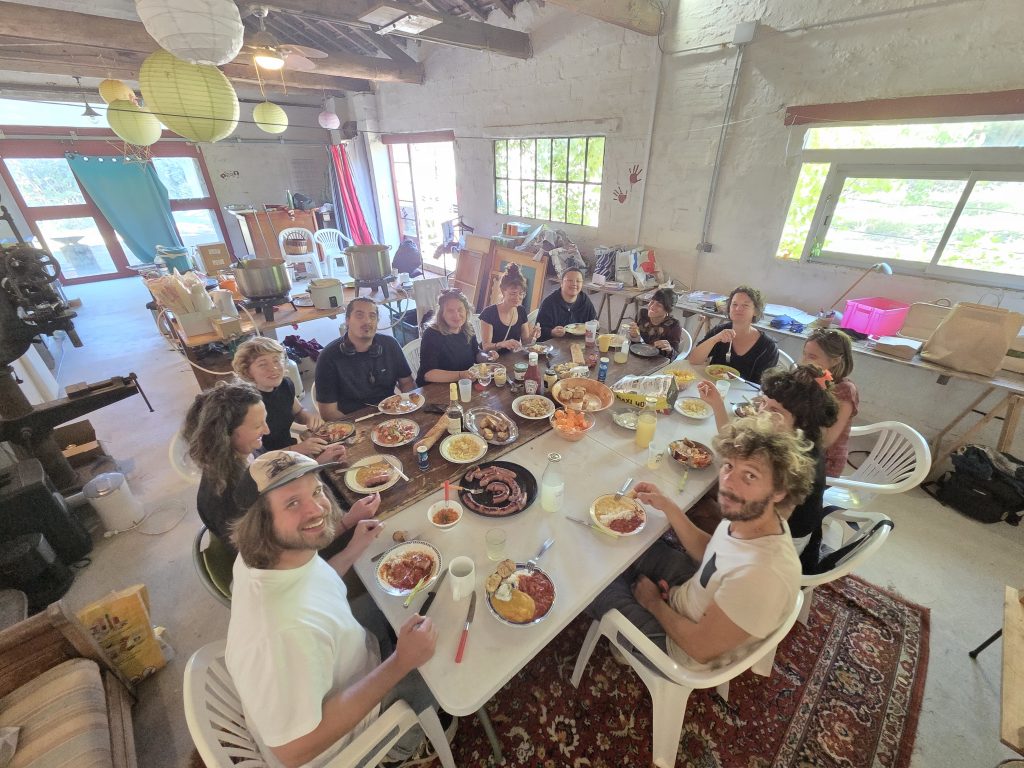
What now?
Here we are at the end of this project, which lasted almost three years from the initial drafting to its final completion.
We went through many stages to understand, organize, distribute, and implement the various parts of this adventure. Beyond a mobility project, this adventure has generated numerous creations: content, methods, and connections. By pooling our skills and moving forward step by step, we gave real meaning to this experience at the individual, association, and network levels.
We learned about the realities of the social, political, and economic structures of the countries we traveled through, acquired tools and organizational skills, and built a solid network. Quite naturally, we divided tasks and responsibilities and progressed until we produced meaningful content.
We are at the end of this process, and many ideas and desires are emerging. Having built all of this inspires me to go further, to use this collective creation and this network for new educational projects that build upon this one. I have some ideas in mind but I’m being patient to finalize this one and let the rest take its time.
However, while writing this last impact story, the question comes to me: What now?
Milena Lachmanowits, L’Engrainé, France