Impact Stories: Actions That Echo
Strengthening Entrepreneurial Spirit
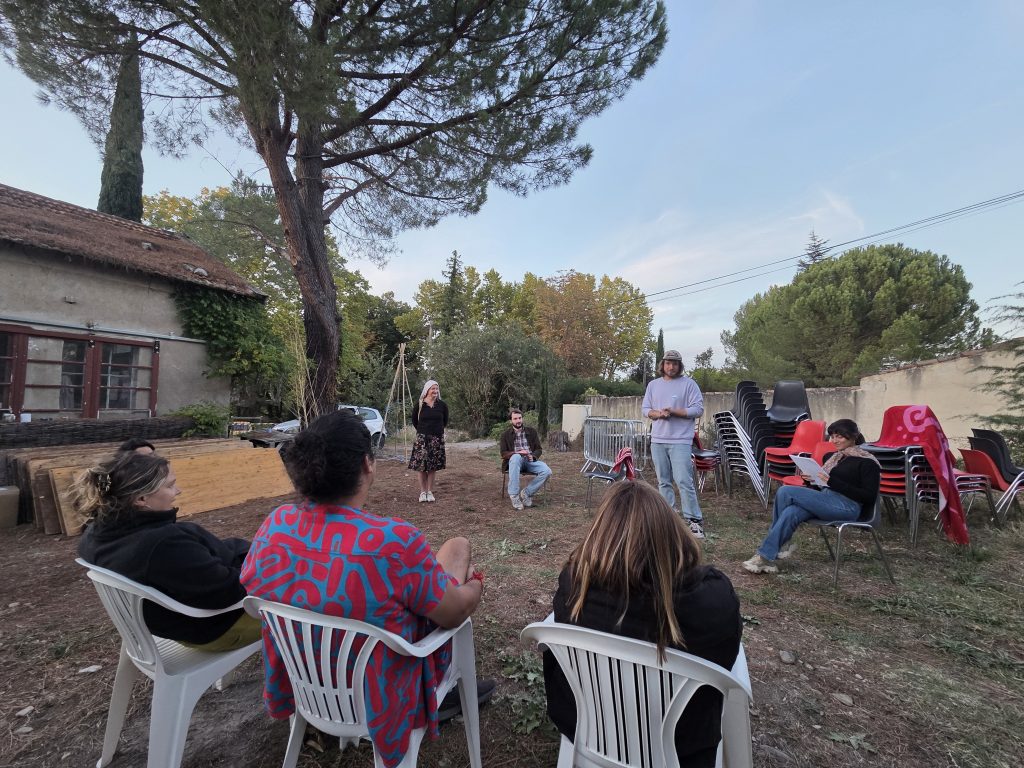
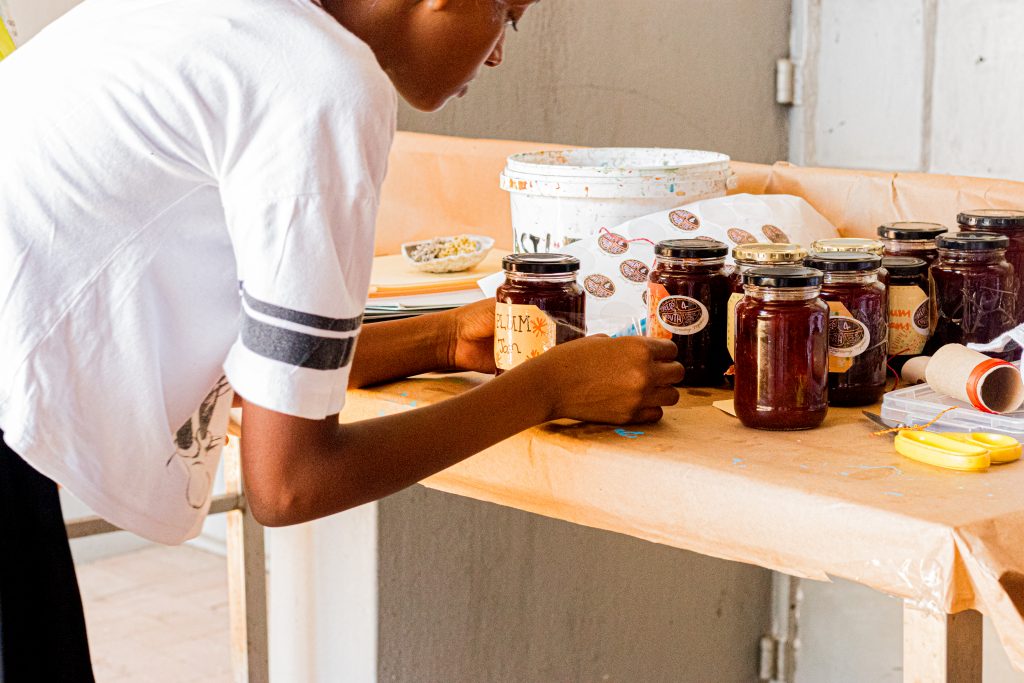
How do community kitchens, networking events, sharing stories around the fireside, preparing food and eating together, travelling to new places, creating art and being in nature promote entrepreneurial enterprise development?
Coming together as 4 different organisations spread across the world using different methods for similar societal issues has been incredibly useful in causing us each to look more deeply into the work that we do.
Having visitors looking in on you and your work and asking questions, sheds a new light on things you may have previously overlooked or never even considered as noteworthy. Likewise, observing these organisations at work in their contexts, enables us to understand our own context more clearly.
The focus of this project on strengthening the entrepreneurial spirit of young migrants for the development of inclusive and sustainable enterprises, had us all asking a lot of questions of each other around what we have found to be most effective in this arena.
Firstly we had to define some vocabulary, as it became quite clear early on that there were some discrepancies between how the European and South African participants understood certain terms, like youth, sustainable, entrepreneurial, migrant etc and so the starting point was to clarify these meanings between us. This process in itself gave us much more understanding of each other’s realities.
What has remained a discussion throughout the project is the difference between promoting entrepreneurial enterprises, and strengthening entrepreneurial spirit. I will speak here about Amava Oluntu’s personal journey with this over the years and why we have settled on the latter as our main focus.
In a country with one of the greatest wealth divides in the world and corresponding unemployment rates, there is much emphasis placed on entrepreneurship as a way out of this predicament. Indeed we have very high rates of entrepreneurship, and it accounts for a large part of our economy and employment numbers. There is also a high failure rate of entrepreneurial enterprises, which means we have a continual cycle of building up and falling apart in the entrepreneurial landscape, which correlates with our resilience and quick responsiveness to immediate needs, with less attention on long term solutions and fixes.
Our education system reflects the same lines as our wealth divide, with some of the finest education in the private schooling system; and our public schooling system offering the spectrum of excellent to extremely poor, correlating directly to the economic and sociopolitical geographies of the schools themselves. So, based purely on the family you were born into, your future trajectory is forever affected by the education system that your family can afford.
While the youths we work with have mostly been through the poorest end of the education system and live in incredibly challenging and under-resourced living environments still structured along apartheid spatial divides with the odds stacked hugely against them, they also have huge amounts of creativity and passion and are no strangers to entrepreneurial activity. Most survive on a combination of 4 or 5 different ‘hustles’ that generate income, spanning arts, music, sports, food and developing and selling products and services.
Some of the main defining qualities of entrepreneurs – adaptability, resilience, adversity, creativity, innovation, experimentation, risk taking – are the very same skills required to survive in challenging living conditions where surprise, stress and uncertainty are abundant. South Africans are renowned for their ability to ‘make a plan’ out of anything, or even out of ‘nothing’.
In our early days of supporting youths to develop entrepreneurial activity, we were partnering with local business schools who offered traditional small business start up training, and while this worked for those who had been through the middle and upper ends of the public school system, it wasn’t hitting home at all with those who had been through the poorer end of the education system, and often left people more despondent than when they began, feeling incapable and sometimes even causing them to give up on ideas that they had previously been successful in moving towards.
Shifting our focus from promoting the formation of enterprises through traditional business school style training, onto recognising and acknowledging the incredible levels of entrepreneurial activity the youths were already engaging with as valid and worthy, and promoting the qualities and behaviours that support entrepreneurial success, meant that the youths could gradually improve the things they were already doing rather than being led to believe that they needed to be different to what they currently were in order to ‘succeed’.
As we focused our attention more onto self awareness, project management and communication skills, creating access and expanding networks through the simple act of gathering in diverse groups and the organising required, over time we have witnessed each other grow, slowly and sustainably, into healthier and stronger individuals and communities better able to self organise. While this method might produce a much slower trajectory of visible entrepreneurial enterprise development, we have seen it lead to healthier individuals and communities who are better equipped for whatever endeavours they wish to pursue, moving at a growth rate that best suits their individual circumstances.
Theresa Wigley, Amava Oluntu, South Africa
Creatures Project
Before going to Muizenberg, we had begun a project focused on creatures, dreams, and
storytelling. The project unfolded in several phases:
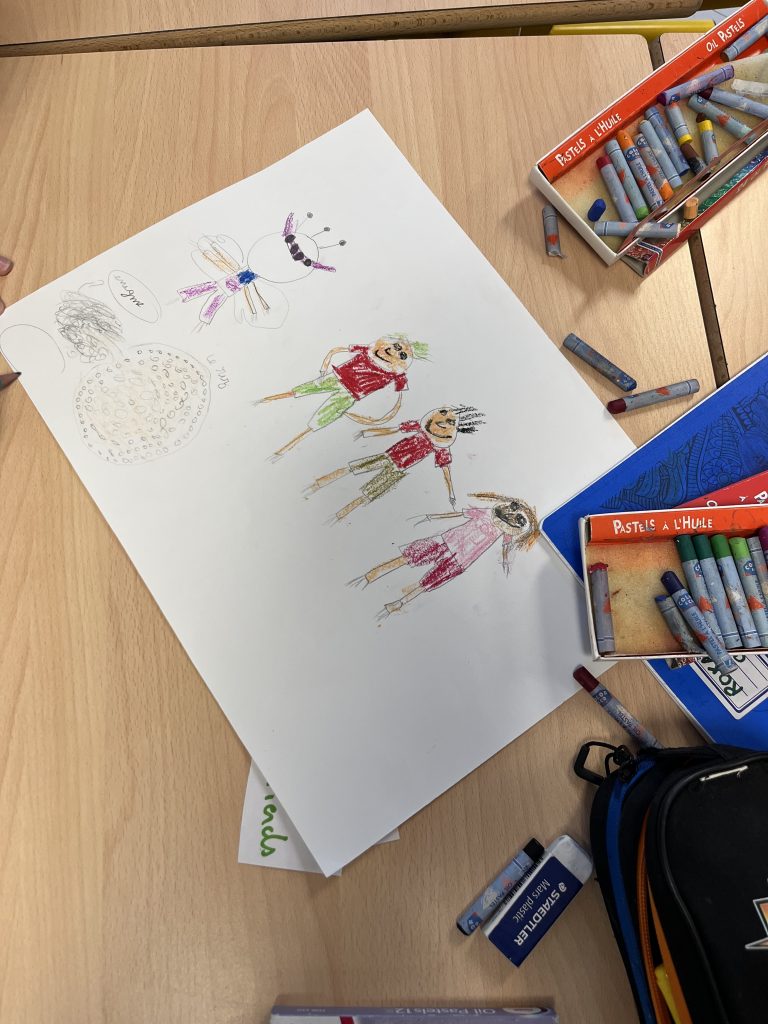
- Writing and character creation workshops to create a bestiary based around a fantasy world;
- Creating a story and the materials to bring it to life (sounds, photos, drawings, etc.);
- Creating a digital book where you are the hero, with the help of a digital workshop specialist;
- Creating visual creation workshops for chimeras based on works exhibited by Ayda Su-Nuroglu, an artist;
- A final exhibition of the creations and the digital book.
To achieve this, we organized six-month workshops aimed at collective development among the teenagers, as well as sharing the knowledge and techniques of the artists and educators
involved in the project. Indeed, specialists in writing, drawing, cyanotypes, digital technology, as well as educators and librarians, have mobilized around this creation.
The final exhibition took place one week after our return from Muizenberg, which was a perfect opportunity to put the acquired knowledge into practice.
Two tools were reused. The first consisted of providing more material for the public during the presentation workshops. We actually organized drawing and cyanotype workshops during the exhibition to allow teenagers who had not participated in the project to have a place. During a workshop at the BAT in Vryground, we realized that giving more material to the participants allowed them more freedom in their creation because they were not constantly obliged to ask others what they were missing. We implemented this practice in order to free the creativity of the
most timid…And it works!
We then organized a discussion session between the various partners, funders, and project participants. During our stay in South Africa, we were struck by a cultural difference between our own and the Anglo-Saxon culture when it came to adopting an energetic, positive, and rewarding stance. We don’t have the same ways of evaluating or considering achievements, and the approach we encountered during our exchange was reinvigorating!
So we tried to modify our perfectionist evaluation methods to allow more room for positivity!
Milena Lachmanowits, L’Engrainé, France
Care To CHANGE: a ‘participaintory’ mural on Fish Hoek Beachfront
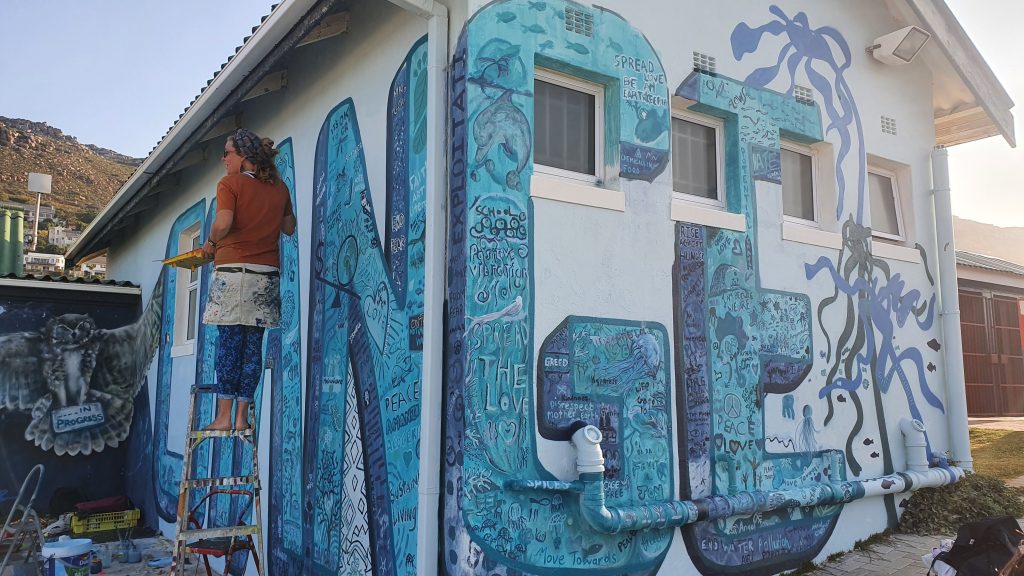
Acknowledging that change is ever present, and that we can influence change for the good of both environmental and human wellbeing, the Care to Change graffiti mural focuses on positive actions.
The site is the Law Enforcement Building on Fish Hoek Beach, Southern Peninsula Cape Town. The basic design of the painting is the word CHANGE in huge letters. In the light blue fill of the letters is everything we want to move towards. In the dark blue drop shadow of the letters is everything we want to move away from. A large eagle owl represents the indigenous wisdom of the ages, and is a prompt for us to choose change for good.
This project was a hands-on experiment in participatory methods, collaboration, and the power of public art to spark dialogue. The painting was facilitated by mural artist Claire Homewood @carecreative_.
Invites went out to networks of youth/ environmental organizations. The diverse painters include youth from a number of schools such as Fish Hoek High, Kommetjie Home School, Blasc Academy and Plumstead High. Activists from environmental organisations such as WESSA, The Green Connection, 350.org and The Southern African Faith Communities Environmental Organisation added their paint strokes with messages of what will make a better world for all, co-creating a weave of options and opportunities.
During 5 months, over 100 people had the opportunity to join the painting and add to the momentum of CHANGE. Layer by layer the painting emerged.
Claire Homewood, Amava Oluntu, South Africa
Use the Silent Lab Tool
For the past two years, L’Engraine has been developing projects around digital culture. The idea is to open our activities to as many people as possible, and using digital tools is a valuable way to do this. This tool attracts young people and teenagers, allowing us to draw them into educational and creative programs. During our stay in Mannheim, we discovered the Silent Lab tool during a workshop. Following this workshop, we discussed using this method in other settings.
Upon returning to France, our team was particularly interested in using this tool. We decided to consider a long-term project after the end of Seeds4youth. To begin building connections and understanding this tool, we organized a short writing workshop before the festival, focusing on myths from the four participating countries. We recorded this creation in two languages and made it available during the closing festival. We had very little time to create this resource, and it wasn’t intended to be a formal educational tool. It was more of a poetic and creative exploration aimed at familiarizing users with the tool.
However, this initial experience was interesting, and we realized that the participants greatly enjoyed it. We therefore wish to develop this tool further by offering longer workshops, spanning several weeks, aimed at creating educational content related to the environment, democracy, and any social issues raised by the group. This exchange of practices in Germany opens up numerous avenues for development and perhaps even future collaborations.
Milena Lachmanowits, L’Engrainé, France
The Bull of Life
It was present, it helped me carry on without thinking, an energetic way of going forward, water flowing endlessly.
A secret was well hidden, in the food, the flowers and a fire dancing around us in the air:
“Il piccolo attore voleva morire ma aveva dimenticato che il pubblico chiede sempre un “bis”. E il pubblico ottiene sempre quello che vuole.”
Words coming back from many years ago, as if nothing had changed, nulla è cambiato finchè…
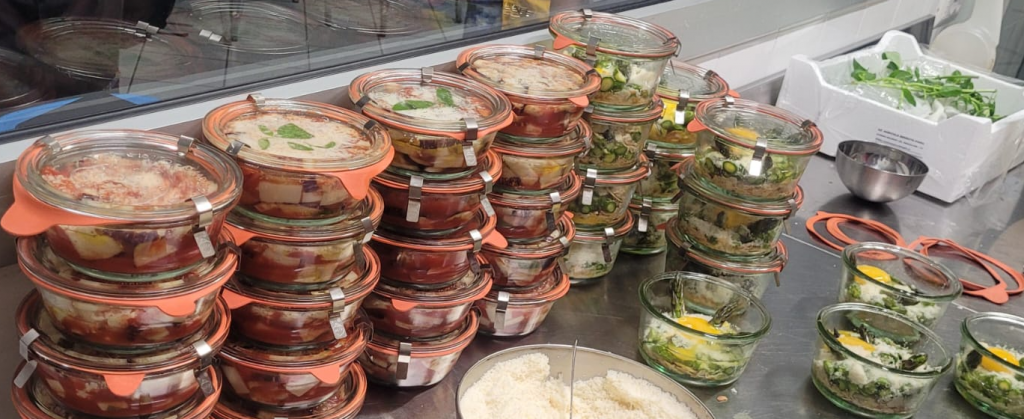
Cambio ! Apollo and Dyonisos are having a chat in the background, sharing a drink in a fancy restaurant while they discuss the origin of umami flavor: is it the soup or the seaweed that first started it ? Let’s cook !
Let’s dance !
(Serge Bolze, L’Engrainé, France)
Forum Theatre – Trying it Out and Being Inspired
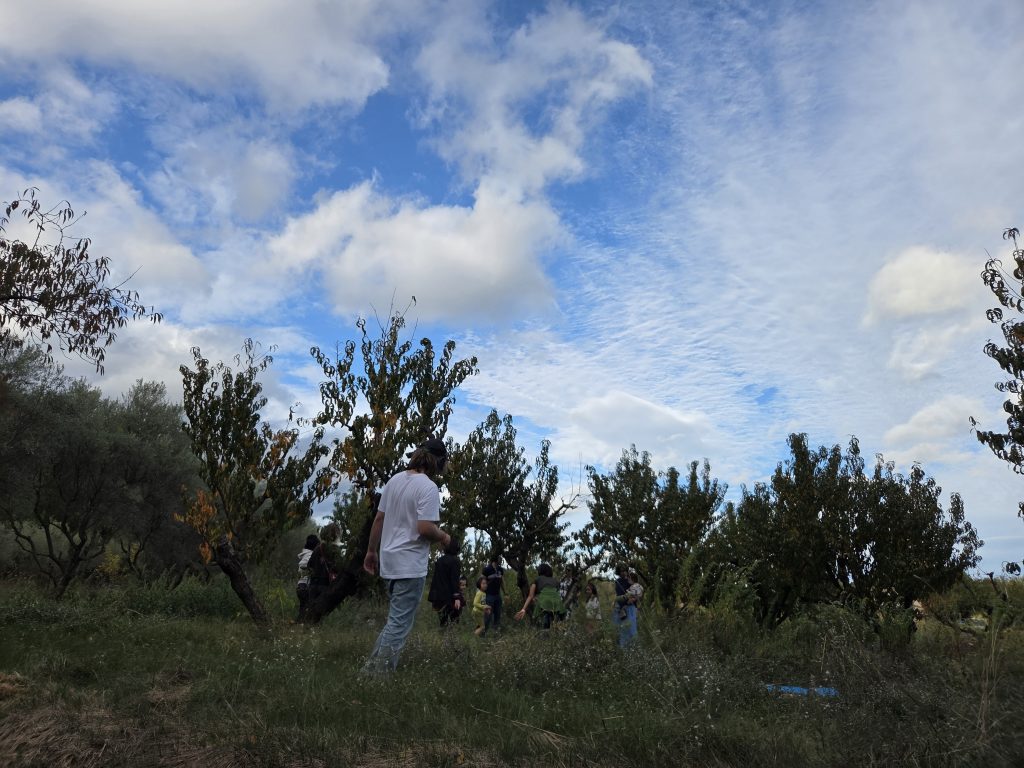
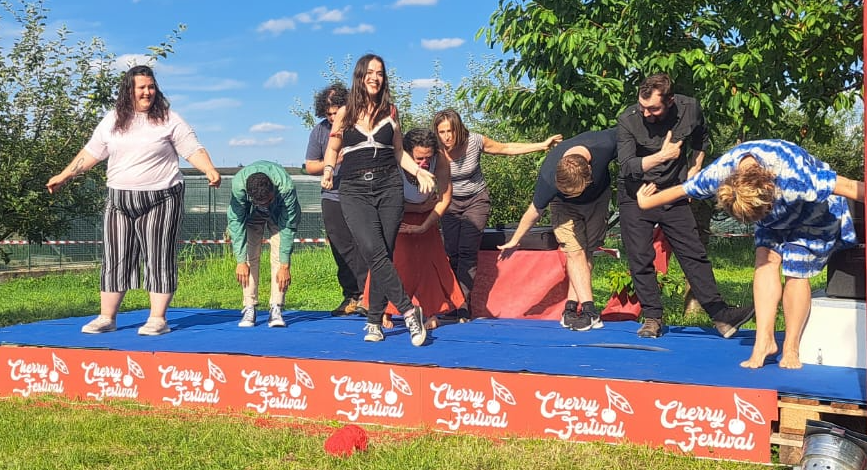
In France, Laurelou introduced us to Forum Theatre, a method where participants act out real-life situations and experiment with different ways of responding. We tried it for the first time outdoors, in the beautiful Orchard – the sun, the trees, and the space made it feel alive in a way a classroom never could.
From the very first scenario, I was hooked. I remember one moment in a school classroom: we presented a short scene, and a student suddenly stood up and changed the story in a way none of us had expected. Others joined in, offering ideas and stepping into different roles. Issues like sexism and racism came up naturally, and the room was buzzing with engagement. It was amazing to see students exploring these topics safely, creatively, and honestly.
Since that day, Forum Theatre has kept popping up in my mind. I’ve been thinking about it constantly in my own work with young people, imagining ways to give them a voice, encourage dialogue, and explore difficult topics. Seeing the students so eager to participate made me realize how powerful this method can be. I’m excited to continue learning and applying it – it feels like a tool that can keep growing, just like the Orchard itself, and open up new ways for young people to express themselves and connect with each other.
Sarah Pint, Starkmacher e.V., Germany